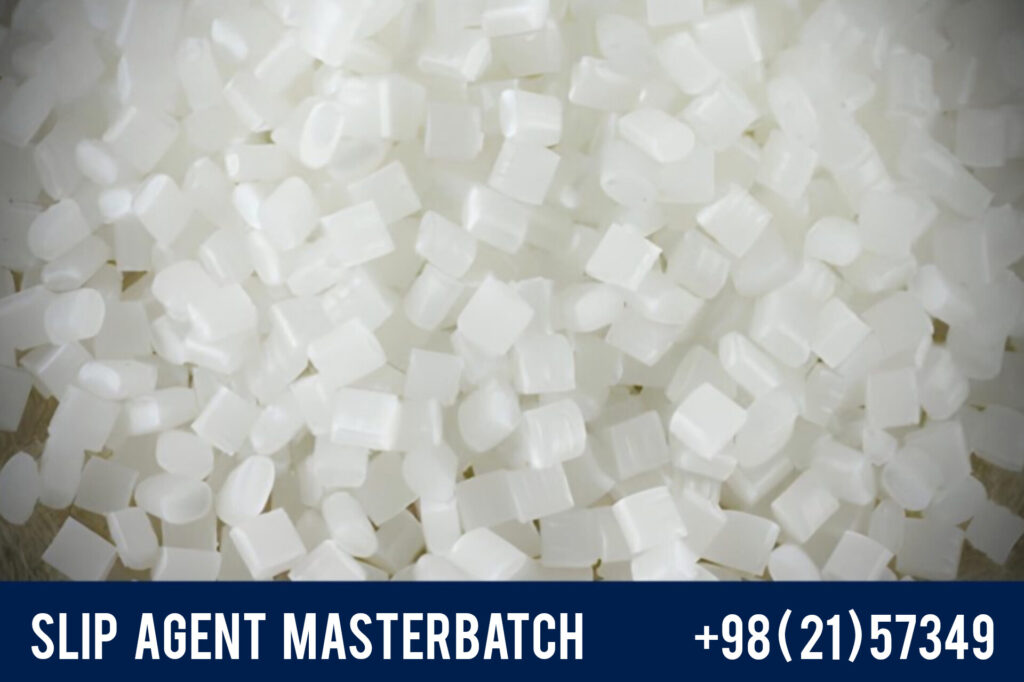
Slip agent masterbatch is a specialized additive in the polymer and plastics industry, produced by combining a base polymer (such as polyethylene or polypropylene) with active slip agents (typically fatty acid amides like oleamide or erucamide). This product is supplied in granule form and is designed to reduce surface friction and adhesion in plastic products.
Due to its ability to enhance production processes and improve the quality of final products, slip agent masterbatch is an ideal choice for manufacturers across various industries, including packaging, film production, and injection-molded parts. Tolymer Company, by offering this high-quality product, meets the diverse needs of the market.
Slip agent masterbatch plays a pivotal role in optimizing plastic production processes thanks to its unique properties.
By reducing surface friction, it prevents polymer film layers from sticking together and ensures smoother material flow in production equipment.
Its applications are extensive and include the following:
This product adds significant value for manufacturers by increasing production efficiency, reducing waste, and enhancing the appearance of final products.
Polymer Base:
Typically polyethylene (PE) or polypropylene (PP), offering high compatibility with common raw materials.
Fatty acid amides (such as oleamide or erucamide) as slip agents, and in some cases, stabilizers or fillers to enhance performance.
Features:
High compatibility with PE, rapid friction reduction, suitable for thin films.
Applications:
Plastic bags, packaging nylon, agricultural films.
Features:
Good thermal resistance, stable performance at high temperatures, ideal for transparent films.
Applications:
Cellophane, BOPP and OPP films, dry food packaging.
Features:
Combines slip and anti-block properties, reducing adhesion while increasing surface roughness.
Applications:
Multilayer films, industrial packaging, heavy-duty nylon.
Features:
High concentration of slip additives, suitable for applications requiring intense slip properties.
Applications:
Complex injection-molded parts, high-speed thin films.
Shopping Plastic Bags:
Bags that easily separate from one another in retail settings due to their slippery surfaces.
Greenhouse Films:
Agricultural films used for greenhouse covers, with reduced adhesion for easier installation and removal.
Transparent Food Packaging:
Such as chip or biscuit packaging, offering both transparency and slip for improved performance in high-speed lines.
Industrial Cellophane:
Rolls used for heavy product packaging, with smooth surfaces for easy rolling and unrolling.
Frozen Food Multilayer Packaging:
Packaging designed for frozen foods, preventing layer adhesion at low temperatures through combined slip and anti-block properties.
Heavy-Duty Transport Bags:
Bags for transporting chemicals or minerals, with reduced friction for easier loading and unloading.
Disposable Medical Syringes:
Components with slippery surfaces for smoother piston movement and enhanced injection precision.
Pharmaceutical Thin Film Packaging:
Films used in high-speed production lines, minimizing waste.
Beyond reducing friction, slip agent masterbatch offers multiple benefits:
Extended Equipment Lifespan:
Reduced pressure and wear on machinery lower maintenance costs.
Improved Processability:
Smoother material flow in extruders and molds boosts production efficiency.
Enhanced Surface Quality:
Final products have a smoother, more professional appearance.
Cost Reduction:
Lower waste and faster production increase profitability.
Despite its numerous advantages, slip agent masterbatch has some limitations to consider:
Temperature Sensitivity:
Slip additives may underperform at extremely high or low temperatures.
Excessive Migration:
Improper use may cause additives to overly migrate to the surface, affecting product appearance.
Precise Dosing Required:
Over- or under-dosing can lead to inadequate slip or excessive stickiness.
Limited Compatibility:
Some polymers, such as PET in specific applications, may require specialized formulations.
Impact on Printing:
Slippery surfaces may reduce ink or paint adhesion unless pretreated.
To maintain the quality of slip agent masterbatch, proper storage conditions are essential:
Temperature:
Store at 15–25°C to prevent changes in chemical properties.
Moisture Protection:
Use moisture-resistant packaging to avoid water absorption, which can affect production.
UV Protection:
Store in covered areas away from direct sunlight to maintain additive stability.
Proper Stacking:
Place bags on horizontal pallets to prevent granule deformation.
Periodic Monitoring:
Regularly check warehouse conditions (temperature and humidity) to ensure product quality.
Packaging and transportation of slip agent masterbatch require careful attention:
Robust Packaging:
Use 25-kg laminated bags to protect against moisture and impact.
Labeling:
Include safety labels with information such as “keep away from heat” and “flammable.”
Safe Transport:
Use vehicles with proper ventilation to prevent heat buildup during long journeys.
Load Stability:
Arrange and secure loads with straps to prevent tipping during transport.
Regulatory Compliance:
Adhere to chemical transport regulations, such as ADR, for safety.
It is a plastic additive that reduces surface friction and adhesion by creating a slippery layer on plastic surfaces, improving production processes and preventing layer sticking.
Slip agent masterbatch reduces friction and makes surfaces slippery, while antiblock masterbatch creates surface roughness to prevent adhesion. They are sometimes combined for enhanced performance.
Packaging (films and nylon), medical (injection-molded parts), agriculture (greenhouse films), and industrial component manufacturing are primary users.
Yes, if formulated with food-contact-approved additives and compliant with standards like FDA, it is safe for food packaging.
It is typically added at 1–2% to raw materials. The exact dosage depends on the polymer and application, and consultation with the supplier is recommended.
It reduces friction, increases production speed, lowers waste, improves surface quality, and extends equipment lifespan.
Yes, when combined with recyclable polymers like PE or PP, it can be recycled and reused in new products.
The recommended dosage is typically 1–2%, but for specific applications, it may increase to 5%. This should be determined through testing and based on production needs.
Yes, its slippery surface may reduce ink or paint adhesion, potentially causing smudging or premature removal. To address this, pretreat the surface with methods like corona treatment to enhance roughness and adhesion, ensuring high-quality, durable printing or painting.
Under proper storage conditions (dry, cool, and UV-protected), it has a shelf life of up to two years. Improper storage may reduce quality.
It depends on the formulation. Slip additives may degrade under UV or extreme temperatures, so UV-resistant types should be used for outdoor applications.
Quality is assessed through tests like coefficient of friction (COF), additive dispersion uniformity, and compatibility with the base polymer.
Yes, by reducing waste, increasing production speed, and minimizing equipment wear, it contributes to cost savings.